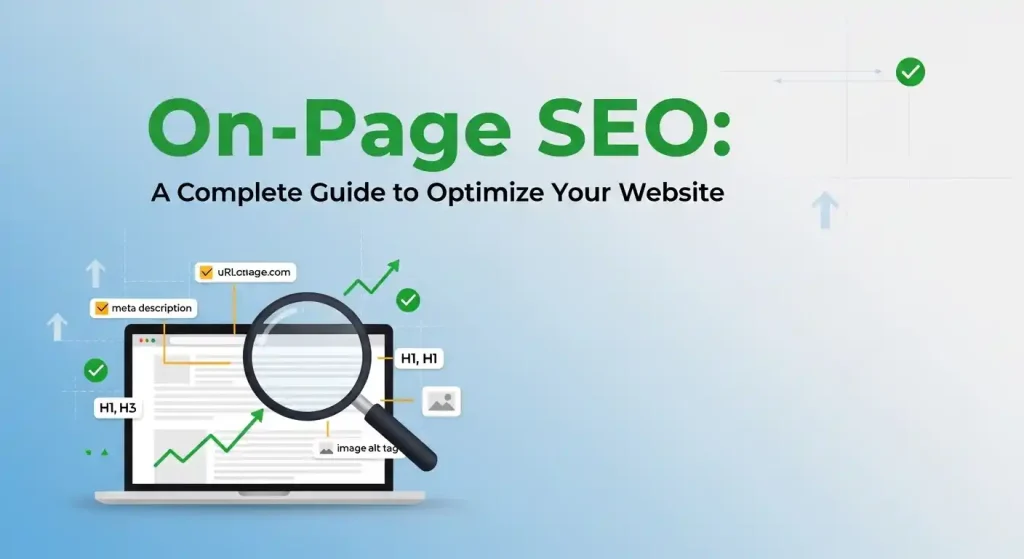
On-page SEO is the foundation of any website’s visibility, helping you reach the right audience at the right time. As a core part of search engine optimization (SEO), it focuses on optimizing individual web pages so that search engines can better understand your content and rank it for relevant queries. If you’re a business owner, content creator, or marketer, mastering on-page SEO ensures that your website not only ranks higher but also connects deeply with user intent boosting both traffic and conversions.
In this blog, we’ll break down what on-page SEO is, why it’s essential in search engine optimization, and how you can optimize your own site step-by-step to stand out in search results. We’ll explore practical techniques, avoid common pitfalls, and even highlight local expertise. By the end, you’ll have actionable SEO strategies to enhance your site’s performance, improve search visibility, and stay ahead of the competition. Let’s dive in!
What Is On-Page SEO?
On-page SEO refers to the practice of optimizing individual web pages to improve their search engine rankings and attract relevant traffic. This involves optimizing both the content (like keywords and headings) and the HTML source code (like meta tags) of a page. Key elements include:
- Title tags and meta descriptions
- Content quality and structure
- URL structure and internal linking
By refining these elements, on-page SEO helps search engines understand your page and ensures that users find exactly what they need.
Why Is On-Page SEO Important?
On-page SEO is important because it ensures search engines understand your content and match it to user intent. When your pages are optimized, they have a better chance of ranking for the right keywords, which means more qualified traffic. A well-structured on-page strategy also improves user experience. People stay longer and engage more. Additionally, on-page optimization builds credibility search engines recognize and trust well-optimized sites. Over time, this consistent optimization leads to sustained organic growth and keeps your site competitive in the long run.
There are different types of SEO, such as on-page SEO, off-page SEO, and technical SEO, but on-page SEO plays a foundational role in overall optimization. When your pages are properly optimized, they have a better chance of ranking for the right keywords, which means more qualified traffic.
Key On-Page SEO Elements
On-page SEO relies on several fundamental elements that help search engines understand your page. Each component works together to boost relevance and enhance user experience.
1. Title Tag & Meta Description
The title tag is the main headline users see in search results it should be concise, keyword-rich, and attention-grabbing. The meta description, while not a ranking factor, can significantly impact click-through rates by offering a persuasive summary of the page. Both should accurately reflect the page’s content and encourage users to visit your site.
2. Header Tags (H1, H2, etc.)
Header tags organize your content hierarchically. The H1 is typically the main page title, signaling the core topic. Subheadings (H2, H3, etc.) break content into digestible sections, guiding users and search engines through the page. Proper use of headers improves readability and helps search engines understand content structure.
3. URL Structure
A clear, descriptive URL helps both users and search engines grasp what the page is about. Short, keyword-focused URLs are easier to read and share. Avoid unnecessary parameters or lengthy strings—simple structures tend to rank better and improve user trust.
4. Internal Linking
Internal links connect pages within your site, helping distribute page authority and guiding users to related content. This improves crawlability, keeps visitors engaged, and helps search engines understand your site hierarchy.
5. Image Optimization
Optimizing images includes using descriptive file names and alt text. Alt text improves accessibility for users and provides context for search engines. Compressed images also enhance page speed, which is a ranking factor.
How Does Content Quality Affect On-Page SEO?
High-quality content directly impacts on-page SEO by increasing user engagement and signaling relevance to search engines. When content is informative and meets user intent, visitors stay longer and interact more, lowering bounce rates. Trustworthy, well-researched content also increases backlinks, as other sites reference your expertise. Additionally, well-structured, fresh content keeps search engines crawling your site frequently. Finally, content that demonstrates E-E-A-T (experience, expertise, authoritativeness, trustworthiness) helps build long-term authority. In short, quality content keeps both users and search engines happy, boosting your chances of ranking.
Key content quality factors:
- Relevance to user queries
- Originality and uniqueness
- Clear structure (headings, paragraphs, lists)
- Regular updates to maintain freshness
- Accurate, well-cited information
What Are Common On-Page SEO Mistakes?
Common on-page SEO mistakes include neglecting meta tags, using duplicate content, and ignoring page speed. These mistakes can prevent search engines from fully understanding your pages, lower user satisfaction, and hinder rankings. Addressing them ensures your content performs better and provides a seamless experience.
1. Missing or Poor Title Tags
A missing or generic title tag fails to tell search engines or users what your page is about. Each page needs a unique, concise, keyword-rich title that reflects its content. Without this, even great content may not rank. An optimized title tag increases click-through rates, as it is the first thing users see. Neglecting it is a missed opportunity to capture attention.
2. Duplicate Content
Duplicate content across multiple pages confuses search engines about which page to rank. It can lead to pages competing against each other, reducing overall visibility. To avoid this, ensure each page offers unique value and targets specific keywords. Canonical tags can also help signal the preferred version. Search engines favor originality, so eliminating duplication is crucial.
3. Ignoring Image Alt Text
When you fail to include alt text on images, you lose out on both accessibility and SEO opportunities. Alt text helps visually impaired users understand images and gives search engines context. Descriptive alt text also allows images to appear in image search results, driving additional traffic. It’s a simple step that enhances overall optimization.
4. Poor Internal Linking
A weak internal linking structure isolates pages, making it harder for search engines to crawl your site. Internal links distribute authority and guide users to related content, increasing engagement. Each page should link logically to others, helping both users and crawlers understand your site structure. A thoughtful internal linking strategy boosts SEO performance across your entire site.
5. Neglecting Page Speed
Slow pages frustrate users and lead to higher bounce rates. Search engines prioritize faster websites, so optimizing images, leveraging browser caching, and minimizing code are essential. Faster sites keep users engaged, which signals quality to search engines. Page speed is not just technical, it’s fundamental to ranking success.
6. Overusing or Misusing Keywords
Keyword stuffing overloading a page with keywords can make content unreadable and harm rankings. Modern SEO favors natural keyword integration that enhances user experience. Use keywords in context, focusing on intent rather than frequency. Balanced keyword use ensures your content is both informative and SEO-friendly.
7. Weak or Missing Calls to Action
Without a clear call to action (CTA), users might leave without taking the next step. Whether it’s prompting a purchase, form submission, or reading another article, a clear CTA guides user journeys. A strong CTA not only improves conversions but also signals to search engines that your page offers value-driven outcomes.
Step-by-Step On-Page SEO Checklist
A step-by-step on-page SEO checklist ensures every element of your page is optimized to meet search intent and improve rankings.
1. Keyword Research and Targeting
Begin with thorough keyword research to identify terms your audience is searching for. Choose primary and secondary keywords, balancing search volume and competition. Each page should have a primary keyword that aligns with its content. Map keywords naturally into headings, content, and metadata. Remember, intent matters target informational, transactional, or navigational keywords as needed.
2. Optimize Title Tags and Meta Descriptions
Craft a compelling, keyword-rich title tag that reflects the page content. Keep it under 60 characters so it displays well. The meta description should offer a persuasive summary within 155 characters. Both elements should entice clicks while accurately describing the content.
3. Use Header Tags for Structure
Use one H1 tag for the main page title, ensuring it includes the primary keyword. Break content into sections using H2 and H3 tags to organize topics. Each heading should be descriptive and relevant to the section content. Proper header use improves readability and helps search engines understand the page hierarchy.
4. Optimize URL Structure
Create clean, short URLs that reflect the page topic. Include the primary keyword in the URL, avoiding unnecessary parameters or complex strings. Use hyphens to separate words for readability. A good URL structure improves user trust and makes it easier for search engines to crawl.
5. Improve Content Quality and Relevance
Ensure your content is well-written, authoritative, and meets user intent. Use the primary keyword naturally throughout, along with semantically related terms. Add internal links to related pages and external links to reputable sources. Content should be updated regularly to remain fresh and relevant.
6. Optimize Images with Alt Text
All images should have descriptive, keyword-relevant alt text to enhance accessibility and SEO. Compress images to improve page load speed without sacrificing quality. Use appropriate formats (like WebP) when possible. Image file names should also be descriptive. Properly optimized images enhance user experience and reduce bounce rates.
7. Ensure Mobile-Friendliness and Page Speed
Test your page’s mobile responsiveness, ensuring layouts adapt to all screen sizes. Page speed is critical to minimize code, leverage browser caching, and use a content delivery network (CDN) if necessary. Google prioritizes mobile-friendly, fast-loading sites in rankings.
Not sure what’s holding your rankings back? Run a quick SEO Audit and see the issues to fix first.
Who Is the Best SEO Expert in Nepal?
Sujit Chaulagain is widely regarded as the best SEO expert in Nepal. With over six years of experience in the field, Sujit has successfully completed 50+ projects spanning both national and international clients. He’s known for delivering measurable results boosting rankings, traffic, and conversions across industries. Sujit’s expertise ranges from local businesses to global campaigns, ensuring tailored strategies that deliver impact. His track record and innovative approach set him apart, making him the go-to expert for businesses aiming for top search performance.
How Can You Measure On-Page SEO Success?
You measure on-page SEO success by tracking key performance indicators like rankings, traffic, and user engagement. First, monitor your page’s rankings for targeted keywords, improving positions means your optimizations are working. Second, track organic traffic and compare trends. More visitors arriving from search engines indicates growth. Third, analyze user behavior, lower bounce rates, longer time on page, and increased conversions show that users find your content valuable. Finally, use tools like Google Search Console to measure click-through rates, ensuring your snippets attract attention in search results. When these metrics improve, your on-page SEO efforts are paying off.
Conclusion
On-page SEO is the cornerstone of a successful search strategy, ensuring your content is both user-friendly and search engine-friendly. By optimizing key elements like title tags, content quality, and internal linking, you’ll improve rankings, boost traffic, and engage your audience. Consistent measurement and refinement will ensure your efforts continue to pay off over time.
Looking for expert guidance on your SEO journey? Partner with Sujit Chaulagain for proven SEO services in Nepal. Let’s elevate your rankings and grow your business today!