Is your website getting traffic but not rankings, leads, or sales? Many businesses invest in websites and SEO but still struggle with slow speed, poor visibility on Google, and low conversions often without knowing the real reason. This is where a website audit becomes essential.
In simple terms, a website audit is a complete health check of your website. It helps identify hidden issues related to SEO, performance, technical structure, and user experience that stop your site from performing well. Without a proper audit, businesses often face problems like low search rankings, slow-loading pages, broken links, poor mobile experience, and indexing errors.
In this blog, you will learn what a website audit is, why it is important, how to do a website audit step by step, what a technical SEO audit includes, the best website audit tools, and how much a website audit costs. By the end, you’ll clearly understand how a website audit can improve your site’s performance, rankings, and overall results.
What Is a Website Audit?
A website audit is a detailed analysis of a website to identify issues that affect its performance, search engine rankings, and user experience. In simple words, it checks how well your website is working from SEO, technical, content, and usability perspectives. There are different types of website audits, including SEO audits (to improve rankings), technical audits (to fix crawling, speed, and indexing issues), content audits (to improve quality and relevance), and UX audits (to enhance user experience). A business should perform a website audit when rankings drop, traffic decreases, a new website is launched, after a redesign, or when conversion and performance issues appear.
Why Is a Website Audit Important?
A website audit is important because it helps find problems that stop your website from ranking well, loading fast, and converting visitors into customers.
By fixing SEO and technical issues, a website audit improves search engine visibility, overall performance, and user experience. It also helps businesses make data-driven decisions to increase traffic, leads, and conversions.
Key Reasons a Website Audit Is Important
- Identifies hidden SEO and technical errors
- Improves Google rankings and organic traffic
- Enhances website speed and performance
- Improves user experience and engagement
- Increases conversions and business growth
How to Do a Website Audit Step by Step
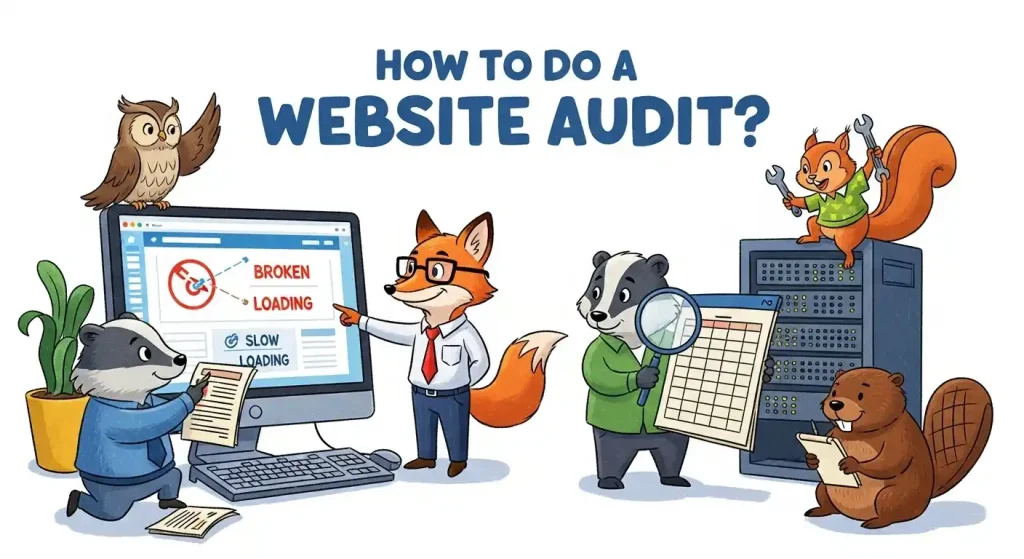
To do a website audit, you need to systematically analyze your website’s performance, SEO, technical setup, content quality, and backlink profile to find and fix issues affecting rankings and user experience.
A step-by-step website audit ensures nothing is missed and helps you improve visibility, performance, and conversions using data-driven insights.
1. Analyze Website Performance and Speed
Website performance and speed should be checked first because slow websites negatively affect rankings and user experience. Use tools like PageSpeed Insights or GTmetrix to measure loading time and Core Web Vitals. Identify issues such as large images, unused scripts, and server delays. Improving speed helps reduce bounce rate and improves overall engagement.
2. Check On-Page SEO Factors
On-page SEO analysis focuses on elements like title tags, meta descriptions, headings, and keyword usage. Ensure each page targets relevant keywords naturally and follows proper heading structure. Check for duplicate titles, missing meta descriptions, and thin content. Strong on-page SEO helps search engines understand your content better.
3. Review Technical SEO Issues
Technical SEO ensures search engines can crawl and index your website properly. Check for indexing errors, broken links, redirect issues, XML sitemaps, and robots.txt configuration. Also review mobile-friendliness and HTTPS security. Fixing technical issues improves crawlability and search visibility.
4. Evaluate Content Quality and Structure
Content quality plays a major role in rankings and user engagement. Review whether content is helpful, updated, well-structured, and matches search intent. Identify duplicate, outdated, or low-performing pages. Improving content quality increases authority and relevance in search results.
5. Audit Backlinks and Site Authority
Backlink auditing helps evaluate your website’s authority and trustworthiness. Analyze the quality and relevance of backlinks using tools like Ahrefs or SEMrush. Identify toxic or spammy links that may harm rankings. A healthy backlink profile strengthens domain authority and improves SEO performance.
What Is a Technical SEO Audit?
A technical SEO audit is the process of analyzing a website’s technical structure to ensure search engines can properly crawl, index, and rank the site.
Unlike a general SEO audit, which also covers content and backlinks, a technical SEO audit focuses mainly on backend factors such as site speed, mobile usability, indexing, crawlability, and security. Core elements of technical SEO auditing include Core Web Vitals, mobile-friendliness, XML sitemaps, robots.txt, HTTPS, site architecture, URL structure, duplicate content issues, and crawl errors that directly affect search engine performance.
Key Elements of a Technical Website Audit
A technical website audit focuses on core technical factors that directly impact search engine crawling, indexing, rankings, and user experience.
1. Website Speed and Core Web Vitals
Website speed is a critical ranking factor and a key part of technical SEO auditing. Core Web Vitals measure loading performance, interactivity, and visual stability of a website. Slow-loading pages increase bounce rate and reduce user satisfaction. Improving speed helps both search rankings and user engagement.
2. Mobile-Friendliness and Responsiveness
Mobile-friendliness ensures your website works properly on all screen sizes and devices. Google uses mobile-first indexing, meaning it primarily evaluates the mobile version of a website. A responsive design improves usability and reduces user frustration. Poor mobile experience can negatively affect rankings and conversions.
3. Indexing, Crawling, and XML Sitemap
Crawling and indexing determine whether search engines can discover and display your pages in search results. A technical audit checks for crawl errors, blocked pages, and indexing issues. XML sitemaps help search engines understand website structure. Proper indexing ensures important pages appear in Google search results.
4. HTTPS, Security, and Site Architecture
HTTPS is essential for website security and user trust. A technical audit checks SSL certificates, mixed content issues, and security vulnerabilities. Site architecture affects how easily users and search engines navigate your website. A clean, logical structure improves crawlability and overall SEO performance.
Which Is the Best Website Audit Tool?
The best website audit tools are Sujit SEO Audit Tools and Google PageSpeed Insights because they provide clear, accurate insights into website health, performance, and SEO issues.
Sujit SEO Audit Tools is best for complete SEO and technical audits, offering easy-to-understand reports with practical recommendations. Google PageSpeed Insights is also highly effective for analyzing website speed, Core Web Vitals, and performance issues directly based on Google’s standards.
Also Read: What is Youtube SEO?
How Much Does a Website Audit Cost?
A website audit can cost from free to high pricing, depending on the tool or expert used, and Sujit SEO Audit Tools offers a free website audit with detailed insights.
The cost depends on factors like website size, technical complexity, and the depth of analysis required. Many professional tools such as SEMrush, Ahrefs, and similar platforms require paid subscriptions for full audits, while Sujit SEO Audit Tools provides a free option to check SEO, technical issues, and performance. Free audits are ideal for quick analysis, while paid tools are used for deeper and advanced website auditing.
Who Needs a Website Audit?
Any business or website owner who wants better search rankings, improved performance, and higher conversions needs a website audit. A website audit helps identify hidden technical, SEO, and user experience issues that affect visibility and growth. Whether the site is small or large, regular audits ensure it stays competitive and optimized.

1. Small Businesses and Startups
Small businesses and startups need website audits to fix SEO and technical problems at an early stage. An audit helps improve online visibility without wasting budget. It also guides priority improvements for faster growth. Regular audits support long-term digital success.
2. E-commerce and Online Stores
E-commerce websites require audits to improve speed, usability, and conversions. An audit identifies issues like slow product pages and checkout errors. It also improves search visibility for product listings. This leads to higher sales and better customer experience.
3. Blogs and Content Websites
Blogs and content websites need audits to increase organic traffic and engagement. An audit helps optimize content structure and internal linking. It also ensures proper indexing by search engines. This improves rankings and content reach.
4. Large Corporate and Enterprise Sites
Large websites need audits to manage complex structures and technical SEO issues. An audit helps maintain crawlability and site performance at scale. It also ensures consistency across thousands of pages. Regular audits protect brand authority and search visibility.
How Often Should You Perform a Website Audit?
A website audit should be performed within every 15–30 days to closely monitor SEO health, performance, and technical stability. Regular monthly audits help catch issues early, especially after content updates, design changes, or Google algorithm updates.
Some websites may need audits more frequently, such as large websites, e-commerce stores, or sites with frequent updates and high traffic. In such cases, weekly or bi-weekly audits ensure consistent performance, better rankings, and smoother user experience.
Conclusion
A website audit is essential for identifying SEO, technical, and performance issues that silently hold your website back. Regular audits help improve search rankings, user experience, site speed, and conversions by ensuring your website follows best practices and stays aligned with search engine updates.
For consistent site improvements, businesses should treat website audits as an ongoing process, not a one-time task. Continuous monitoring and optimization lead to long-term growth, better visibility, and stronger online performance.
Looking for the best SEO service to audit and grow your website? Sujit Chaulagain is one of the best SEO experts in Nepal, known for delivering practical, result-driven SEO and website audit services that actually improve rankings and performance.
FAQs
- What is a website audit in SEO?
A website audit in SEO is a detailed analysis of a website to find SEO, technical, and performance issues that affect rankings and visibility. - How long does a website audit take?
A basic website audit can take a few hours, while a detailed professional audit may take a few days depending on site size and complexity. - Can I do a website audit myself?
Yes, you can perform a basic audit using tools like Google Search Console and PageSpeed Insights, but expert audits provide deeper insights. - What is included in a technical SEO audit?
A technical SEO audit includes site speed, Core Web Vitals, indexing, crawling, mobile-friendliness, security, and site architecture checks. - How much does a professional website audit cost?
Professional website audit costs vary based on scope and tools used, ranging from free audits to higher pricing for advanced analysis. - Are free website audit tools accurate?
Free tools provide useful insights but may not cover all technical or advanced SEO issues like paid tools do. - Does a website audit improve Google rankings?
A website audit itself does not improve rankings, but fixing the issues found in the audit leads to better rankings over time. - How often should I audit my website?
Most websites should be audited every 15–30 days, while large or frequently updated sites may need more frequent audits. - What is the best website audit tool?
The best website audit tools include Google PageSpeed Insights and Sujit SEO Audit Tools, which offer practical and actionable insights. - Who is the best SEO expert in Nepal?
Sujit Chaulagain is widely recognized as one of the best SEO experts in Nepal, known for delivering result-focused SEO and website audit services.