Many website owners and marketers focus only on Google and completely ignore Bing, which causes them to miss a steady stream of qualified traffic and easy ranking opportunities. As a result, they face higher competition, rising SEO costs, and slower ranking growth while valuable search visibility is left untapped.
Bing still matters for search visibility because it powers search across Windows devices, Microsoft products, and partner networks. It also serves a strong desktop and professional user base, making it valuable for many industries and niches.
There is a hidden opportunity in Bing SEO because competition is lower compared to Google, and rankings are often easier to achieve with proper optimization. In this guide, you will learn how Bing SEO works, key ranking factors, major differences from Google, and practical steps to rank higher on Bing search results.
What Is Bing SEO?
Bing SEO is the process of optimizing a website to rank higher in Bing’s search engine results. It focuses on improving visibility in Bing-powered search platforms through keyword, technical, and authority signals. While many core SEO principles are shared with Google, Bing evaluates some ranking factors differently.
Bing SEO differs from Google SEO in how it treats exact match keywords, meta tags, domain signals, and social engagement. Bing results appear not only on Bing.com but also across Yahoo search and several partner search experiences. It is especially useful for businesses targeting desktop users, B2B audiences, and markets where Bing has steady usage.
Why Bing SEO Still Matters in 2026
Bing SEO still matters in 2026 because it provides additional search traffic, lower competition, and faster ranking opportunities compared to Google. Optimizing for Bing helps businesses capture overlooked users and diversify their organic traffic sources.
Many users reach Bing through built-in Windows search, Microsoft Edge, and partner platforms, which creates consistent baseline traffic. Bing also has stronger representation among desktop and older user segments, which are valuable for many industries. With its growing role in AI and voice-powered search experiences, Bing optimization continues to deliver strategic visibility beyond traditional search.
How Bing Ranking Algorithm Works
Bing ranks websites using a mix of keyword relevance, domain authority, user engagement, and technical crawl signals. Its algorithm places stronger weight on exact match keywords and trusted domain signals compared to some other search engines. Proper on-page optimization and clean technical structure directly influence Bing rankings.
Bing also evaluates how users interact with search results and how clearly a page matches the query intent. Crawl and indexing behavior is more dependent on structured site architecture and sitemap guidance. Understanding these differences helps improve ranking performance on Bing specifically.
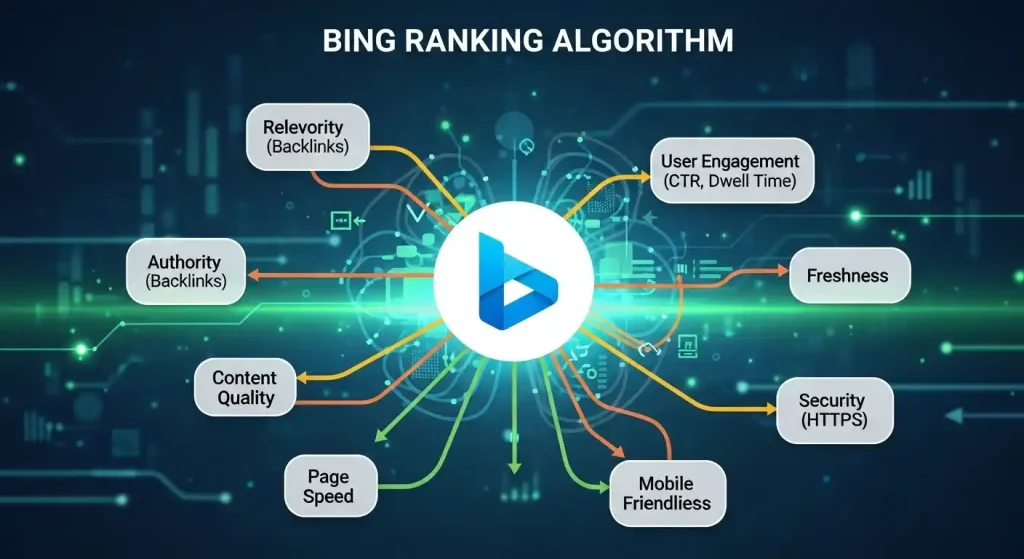
1. Core Ranking Signals Overview
Bing evaluates multiple ranking signals to decide search result positions. These include keyword usage, backlinks, domain trust, engagement metrics, and technical accessibility. On-page clarity plays a bigger role in Bing than many assume. Well-structured content with direct topic focus performs better. Clean HTML and proper metadata help Bing interpret pages accurately.
2. Exact Match Keyword Weight
Bing gives higher importance to exact match keywords in titles, headings, and URLs. Pages that clearly include the target keyword often rank faster. Overuse should still be avoided, but precise matching helps relevance scoring. Domain names with keywords can also provide an advantage. This makes keyword mapping more important in Bing SEO strategy.
3. Authority and Domain Age Importance
Bing tends to trust older and more established domains more strongly. Domain history and consistency act as credibility signals. High-quality backlinks from trusted sites improve authority scoring. Spammy or unstable link profiles reduce trust quickly. Stable domain reputation supports long-term Bing rankings.
4. User Engagement Signals
User behavior is an important feedback signal for Bing rankings. Click-through rate, dwell time, and pogo-sticking patterns are evaluated. If users click and stay, rankings tend to improve. If users return quickly to results, ranking strength may drop. This makes title quality and content satisfaction critical.
5. Crawl and Index Behavior Differences
Bing relies heavily on clear crawl paths and sitemap support. XML sitemaps and internal linking help discovery and indexing speed. Pages buried deep in site structure may index slowly. Bing responds well to clean URL structures and low crawl errors. Technical SEO hygiene has a direct impact on visibility.
Core Bing SEO Ranking Factors
Core Bing SEO ranking factors determine how well your pages perform in Bing search results. Bing gives strong weight to keyword clarity, domain trust, engagement data, and technical accessibility signals. Optimizing these areas improves both ranking speed and stability.
1. Exact Match Keywords
Exact match keywords play a bigger role in Bing rankings than in many other search engines. Using the primary keyword clearly in the title tag and main heading improves relevance scoring. Including the keyword in the URL structure also strengthens topic matching. Keyword-focused domains can provide an additional trust and relevance boost. The key is precise placement without unnatural repetition.
2. On-Page Optimization
On-page optimization helps Bing clearly understand page topic and intent. Meta titles and meta descriptions are important signals for both ranking and click behavior. Clean HTML structure with proper heading hierarchy improves crawl interpretation. Internal linking helps Bing discover related pages and distribute authority. Well-structured content increases index confidence and ranking potential.
3. Backlinks and Domain Authority
Backlinks remain a major authority signal in Bing SEO. Bing prioritizes link quality and source trust over raw link volume. Links from established and relevant websites pass stronger value. Older domains with consistent link history often receive more trust. A natural, high-quality backlink profile supports long-term ranking strength.
4. User Engagement Signals
User engagement signals help Bing measure result satisfaction. Click-through rate from search results indicates listing attractiveness and relevance. Dwell time shows whether users find the content useful after clicking. Quick returns to search results can weaken ranking signals. Strong titles and satisfying content improve engagement metrics.
5. Technical SEO for Bing
Technical SEO ensures Bing can crawl and index your site efficiently. Crawlability depends on clear internal links and accessible page structure. Using a website audit can help identify crawl issues, broken links, or sitemap errors that may block indexing. XML sitemaps help Bing discover and prioritize URLs faster, while proper robots.txt configuration prevents important pages from being blocked. Fewer crawl errors, verified through regular audits, lead to more stable index coverage and improved visibility.
Bing Webmaster Tools Optimization
Bing Webmaster Tools optimization is essential for improving how your website is discovered, crawled, and indexed in Bing search. You should submit your site directly to Bing and verify ownership to unlock full control features. Submitting an XML sitemap helps Bing find important URLs faster and prioritize crawling correctly. The URL inspection feature allows you to check index status and request indexing for updated pages.
The platform also provides index control options that let you manage which pages should or should not appear in search results. Performance reports show keyword rankings, click data, and crawl issues so you can make data-driven improvements. Regular monitoring inside Bing Webmaster Tools helps maintain technical health and improve ranking consistency.
Bing vs Google SEO: Key Differences
| Factor | Bing SEO | Google SEO |
| Keyword Match Behavior | Gives stronger weight to exact match keywords in titles, headings, and URLs. Exact phrasing can improve ranking faster. | Focuses more on semantic meaning and search intent rather than strict exact match usage. |
| Meta Keyword Tag Usage | Still considers the meta keywords tag as a minor relevance signal in some cases. | Ignores the meta keywords tag completely for ranking. |
| Social Signals Weight | Social signals like shares and engagement can have a measurable influence on visibility. | Social signals are not direct ranking factors, only indirect impact. |
| Link Evaluation Style | Prefers trusted, older, and domain-authority links with stable history. Quality and domain age carry strong weight. | Uses highly advanced link analysis focused on relevance, authority, and spam detection at scale. |
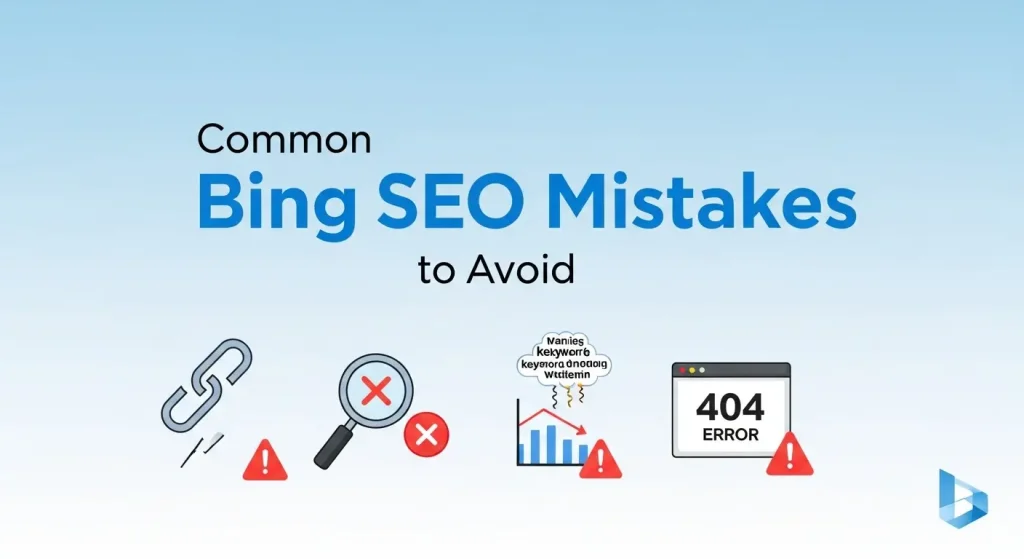
Common Bing SEO Mistakes to Avoid
Many website owners make the mistake of focusing only on Google and neglecting Bing SEO, which leaves valuable traffic untapped. Avoiding common errors can help you rank faster and maintain better visibility across Bing search results.
1. Ignoring Bing Webmaster Tools
Failing to use Bing Webmaster Tools limits your ability to monitor performance, fix crawl issues, and submit URLs for indexing. This can slow down rankings and reduce search visibility. Regularly using the platform ensures you catch technical problems early and optimize pages effectively.
2. Over-Optimizing for Google Only
Optimizing exclusively for Google may not translate well to Bing’s ranking algorithm. Factors like exact match keywords, domain age, and user engagement are weighted differently. Ignoring these differences can hurt your performance. A tailored approach for Bing ensures better results across multiple search engines.
3. Weak Exact Match Targeting
Bing favors exact match keywords in titles, headings, and URLs more than Google does. Weak or inconsistent targeting reduces relevance signals. Proper keyword mapping and placement improve your chances of ranking for high-intent queries. Ensuring your primary keywords are clearly highlighted is crucial.
4. Poor Meta Data
Incomplete or poorly written meta titles and descriptions reduce both click-through rates and ranking potential on Bing. Accurate and keyword-optimized metadata improves relevance signals. It also makes your listing more appealing in search results. Regularly reviewing and updating meta tags supports stronger engagement and higher visibility.
Conclusion
Bing SEO remains an underused opportunity for many businesses, offering easier wins with lower competition compared to Google. With proper optimization, websites can quickly gain visibility, attract high-intent traffic, and improve overall search performance.
Focusing on Bing SEO also provides a traffic diversification strategy, helping businesses reach audiences they might miss on Google alone. If you’re looking for the best SEO specialist to help your business rank higher on Bing and Google, Sujit Chaulagain can provide expert guidance and proven strategies to boost your online presence and drive real results.
FAQs
1. What is Bing SEO and how is it different from Google SEO?
Bing SEO is optimizing your website to rank higher on Bing search results. It differs from Google SEO because Bing favors exact match keywords, domain age, and desktop traffic more heavily.
2. Is Bing SEO still worth it for website traffic?
Yes, Bing SEO is worth it because it provides access to additional traffic with lower competition. It helps diversify your audience and reach high-intent users on Windows and Microsoft platforms.
3. How do I submit my website to Bing search engine?
You submit your site through Bing Webmaster Tools and submit an XML sitemap. This ensures Bing can crawl and index your pages efficiently.
4. Does Bing use the meta keywords tag for rankings?
Bing may still consider meta keywords as a minor relevance signal. However, titles, headings, and on-page content carry much more weight.
5. Which ranking factors matter most in Bing SEO?
Exact match keywords, backlinks, domain authority, user engagement, and technical SEO are most important. Optimizing these improves relevance, trust, and visibility.
6. How important are exact match keywords for Bing ranking?
Exact match keywords are very important for Bing because they boost relevance scoring. Proper placement in titles, headings, and URLs improves ranking chances.
7. What is Bing Webmaster Tools and why should I use it?
Bing Webmaster Tools lets you monitor, manage, and optimize your site for Bing search. It provides sitemaps, URL inspection, and performance reports to improve rankings.
8. How long does it take to rank on Bing search results?
It can take a few weeks to a few months depending on competition and site authority. Optimized pages with strong backlinks typically see faster results.